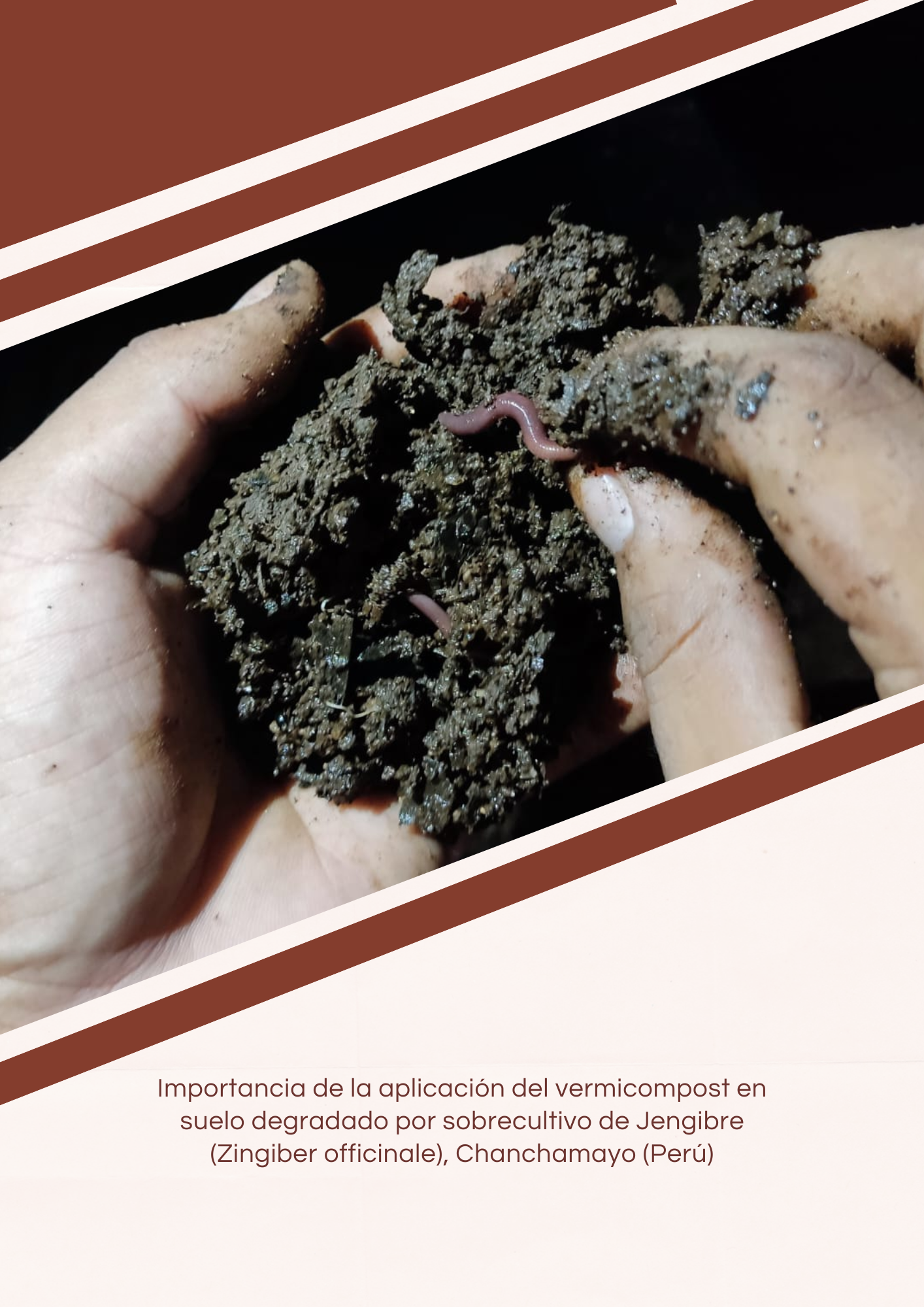
Importance of the application of vermicompost in soil degraded by overcultivation of ginger (Zingiber officinale), Chanchamayo (Peru)
DOI:
https://doi.org/10.54288/yotantsipanko.v3i1.29Keywords:
Bioremediation, importance, humus, vermicompostAbstract
The objective is to determine the importance of humus in the recovery of degraded soil with artificial fertilizers due to the frequent cultivation of ginger. A mixed quasi-experimental investigation was carried out in three stages: 1) preparation of the vermicompost, 2) characterization of the degraded soil with the measurement of pH, humidity and the "Biomass Determination" test to verify the presence of organic matter; 3) preparation of four treatments (T) in pots: T1 (100% soil); T2 (90% soil and 10% humus); T3 (80% soil and 20% humus); T4 (70% degraded land and 30% humus); The result was that the T4 bean plant presented better development, with thick stems and green leaves, unlike the other treatments, which showed weak plants, thin stems, and a low population of leaves with yellowish spots. With this study we agree with other investigations that describe humus as beneficial for the recovery of soils degraded by overcultivation.
Downloads
Downloads
Published
Issue
Section
License
Copyright (c) 2023 Jessica Zaida Muñoz Hermitaño, Tania Lizbeth Aranda Rojas, Evelyn Milagros Espinoza Quichca, Denzel Jose Martinez Blacido, Marco Jeampier Mendoza Castillo, Kenyi Daladier Segura Taipe

This work is licensed under a Creative Commons Attribution 4.0 International License.